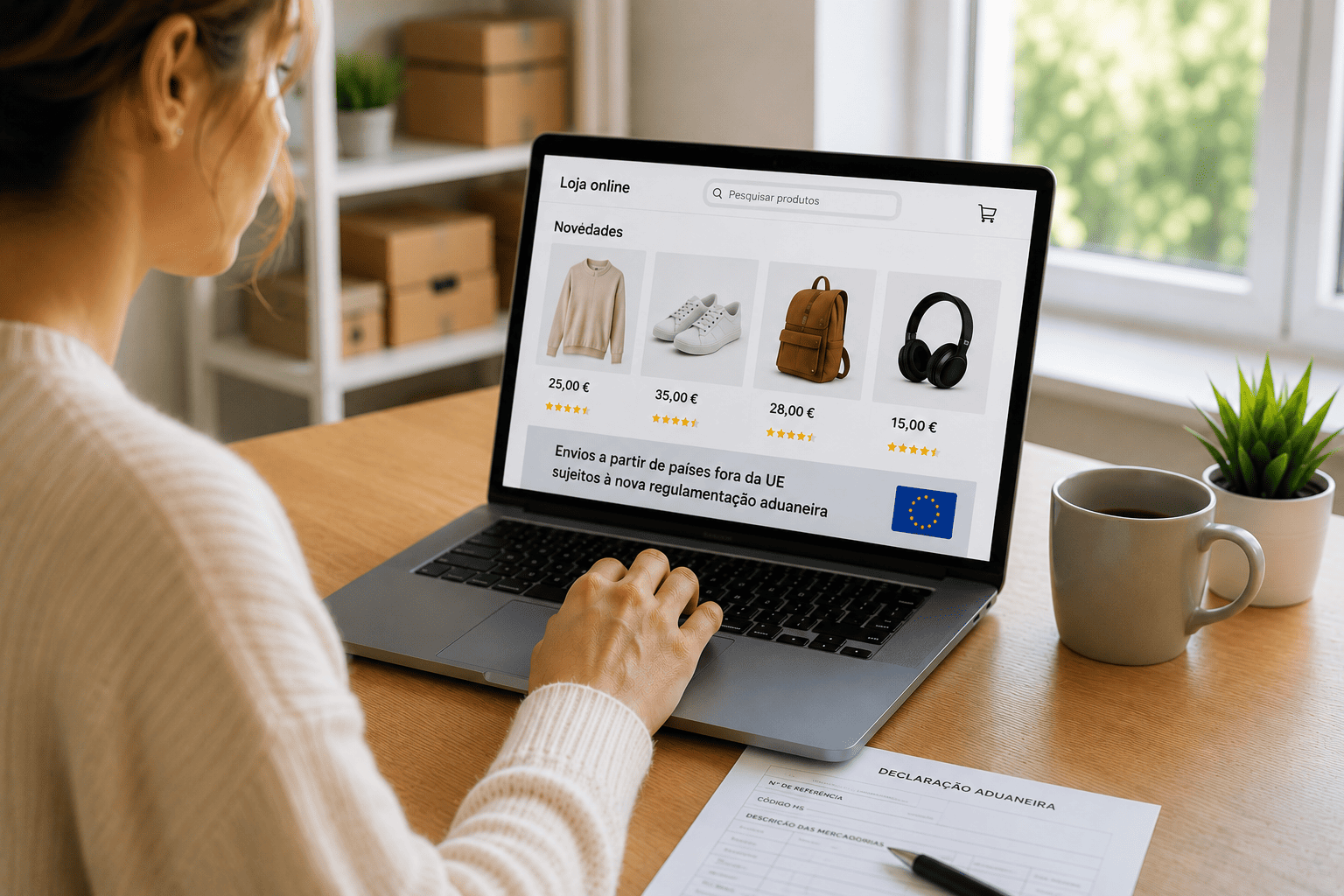
Are you wondering whether the European Union customs reform affects you? If you buy products from online stores outside the European Union or import goods for your business, the answer is yes. It is important to understand the changes in detail to avoid unexpected costs and delays.
The European Union customs reform was created to adapt the customs system to the growth of international e-commerce and improve control over goods entering European territory. The initiative is part of the modernization project of the Customs Union promoted by the European Commission.
In recent years, purchases made through international platforms have increased considerably. This has led the European Union to update its regulations to strengthen controls, unify procedures, and require greater transparency in the information that accompanies each shipment.
One of the most relevant changes is the removal of the well-known "de minimis" exemption, which until now allowed certain low-value shipments to be exempt from customs duties.
Although many of the changes affect customs procedures, the main new development for companies and individuals is the removal of the duty exemption for shipments under €150, together with new documentation and control requirements.
These are the main changes:
Until June 30, 2026, imports from countries outside the European Union with a value below €150 could benefit from the customs duty exemption, known as the "de minimis" rule. With the entry into force of the reform, these are the main differences between companies and consumers:
| Aspect | Companies (B2B) | Individuals (B2C) |
|---|---|---|
| Shipments up to €150 | Standard tariffs will apply according to the type of goods. | The exemption disappears. A fixed cost of €3 for each product category declared at customs will apply. |
| Shipments over €150 | Standard tariffs will continue to apply (ad valorem). | Standard tariffs will continue to apply (ad valorem). |
| Customs declaration | Consolidated declarations may continue to be used when permitted by regulations. | An individual declaration will be mandatory for each item shipped. |
| Customs clearance | No significant changes compared with the current procedure. | Shipments that do not use IOSS must be cleared in the country of destination. |
| Shipment information | It will be mandatory to correctly identify the goods and the recipient. | In addition to the above, product identifiers (PID) may be required for each item. |
As the table shows, the reform distinguishes between shipments addressed to companies (B2B) and those intended for end consumers (B2C), so the requirements may vary depending on the type of operation. You can check the general aspects of the regulation on the official portal of the European Commission’s Customs Union.
One of the new features of the reform is the application of a fixed cost of €3 for certain B2C shipments under €150. This amount is calculated for each product category declared at customs (HS code line), and not necessarily according to the number of items included in the order.
For example, if an order includes a T-shirt, a pair of trainers, and headphones, each one may belong to a different category and generate a separate cost. However, if you buy three identical T-shirts, they will usually be declared as a single product category.
The reform does not affect a specific platform, but rather the origin of the shipment. In other words, if you buy a product from Temu, Shein, AliExpress, or Amazon and it is shipped from a country outside the European Union, that shipment will be subject to the new customs regulations.
For example, if you buy a garment from Shein or an accessory from Temu that is shipped directly from China, the import must comply with the new requirements established by European regulations. However, if that same product is shipped from a warehouse located within the European Union, the treatment may be different. In any case, it is always advisable to check the origin of the shipment before making an international purchase.
If you import goods for your business, one of the main differences will be the preparation of documentation. The new regulations require more precise information about each shipment to speed up customs clearance and reduce incidents. It will be essential for the documentation to be complete and accurate, including the correct identification of the recipient, a detailed description of the products, their declared value, and the corresponding tariff classification using the relevant HS code. If you have questions about the tariff classification of goods, you can consult the European Union TARIC database.
Having this information from the outset will help speed up customs clearance and reduce the risk of incidents or delays. In this context, having specialized support in customs management and international shipping can help you prepare each operation correctly.
The changes introduced by the customs reform make specialized advice more important than ever.
In a context where imports will be subject to new requirements and costs, having the support of a specialist can make all the difference. At Mail Boxes Etc., we help companies and individuals manage their international shipments, adapt to the new regulations, and correctly prepare each operation.
.png)